
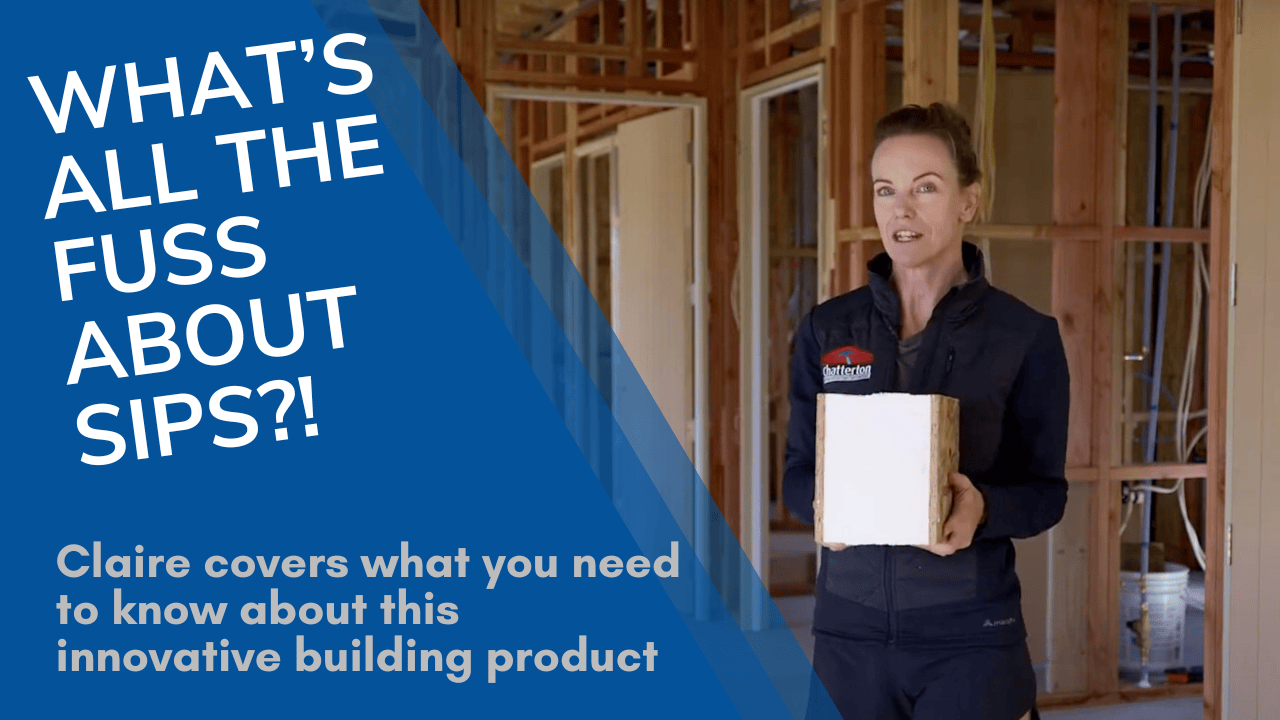
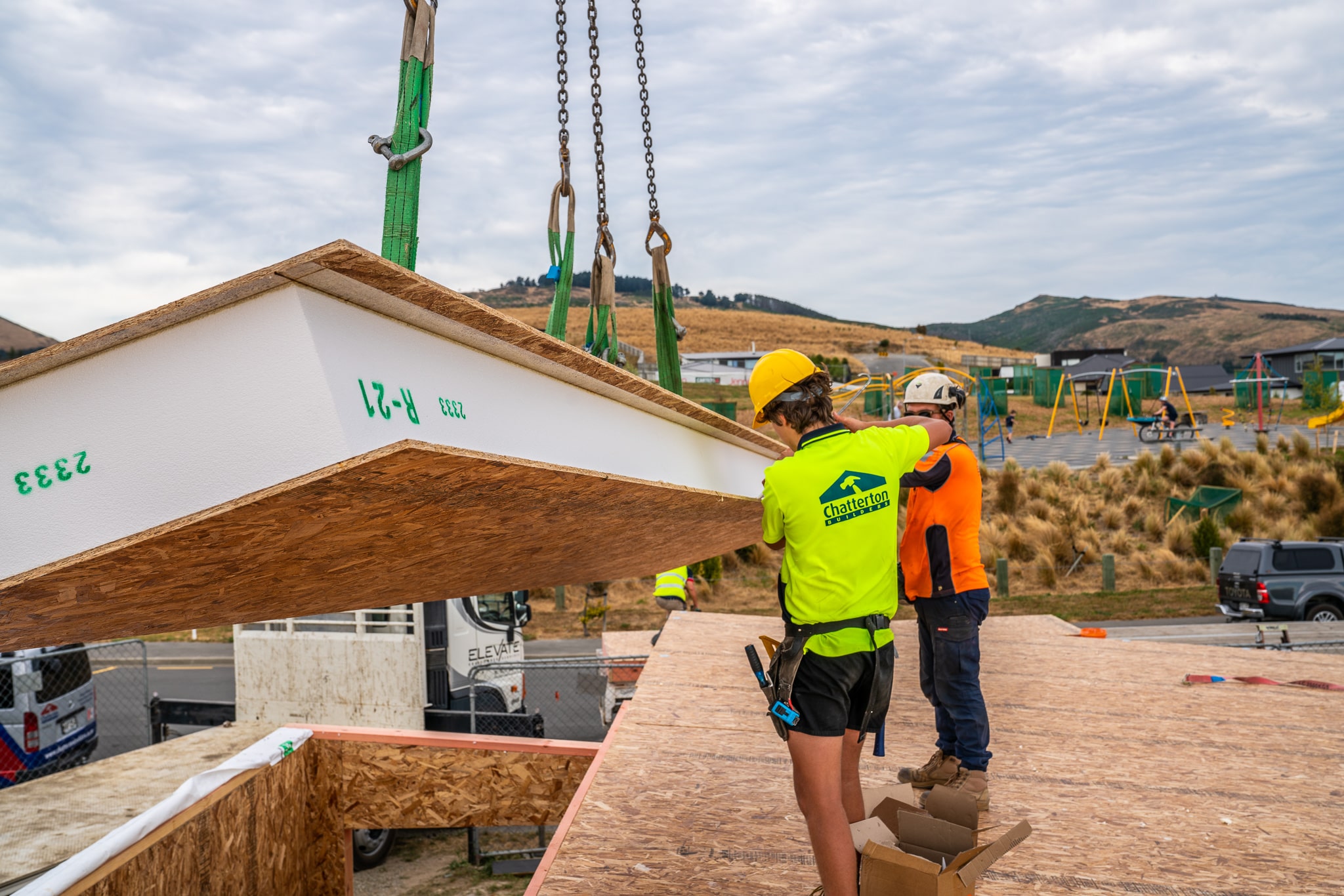
Structural Insulated Panels (SIPs) are high-performance, thermally efficient panels made from two structural boards with a rigid foam core. They replace traditional framing, bracing, and insulation in one streamlined system, and can be used in walls, roofs, and floors.
Structural Insulated Panels (SIPs) for High-Performance Homes in Canterbury
What are Structural Insulated Panels
How Structural Insulated Panels Deliver Superior Performance
- Excellent thermal insulation and airtightness
- Up to 90% savings on heating and cooling when paired with Passive House principles
- Strong, ductile construction ideal for earthquake-prone and high wind zones
- Faster build times, with a weathertight shell achieved in days
- Reduced weather delays through indoor pre-assembly and fast on-site install
- Design flexibility and long-term performance with less construction waste
Where SIPs are the right fit, they help us optimise performance, energy savings, and durability, giving homeowners lasting benefits.
Is SIPs The Right Choice For Your Project?
SIPs vs Traditional Framing: What’s the Difference?
Structural Insulated Panels (SIPs) and traditional timber framing are two different approaches to achieving an insulated and airtight building envelope.
SIPs integrate structure and insulation into a single, factory-made panel, which can simplify construction and provide a consistent starting point for thermal performance. Traditional timber framing, when combined with a well-designed airtightness membrane and careful detailing, can achieve comparable levels of insulation and airtightness. This approach typically involves more on-site work and coordination to manage junctions, airtight integrity and continuity. In both cases, the final performance depends on design, detailing and execution rather than the system alone.
SIPS INSTALL SPEED
Time Lapse Of SIPs Install
Check out our two 30-second time-lapse videos of one of our Christchurch home builds!
What Sets Our SIPs Builds Apart
Having designed & built SIPs homes since 2011, we can confidently claim to be leaders in this field of construction.
Proven Experience
Building with SIPs since 2011, with a trained and knowledgeable team.
Expert Guidance
We understand what’s required in both design and construction, offering trusted advice from start to finish.
Indoor Panel Assembly
Panels are pre-assembled in our indoor plant, protected from the weather and ready for fast, efficient installation on site.
Collaborative Network
We work closely with SIPs-experienced designers, engineers, and suppliers to provide practical input and cost insights.
Streamlined Process
Established systems ensure smooth supply, delivery, and on-site installation.
Technical Know-How
In-depth understanding of SIPs shop drawings, with the ability to identify and solve design inconsistencies early.
To learn more about SIPS, download our free guide!

SIPs Home Building FAQs – Costs, Build Times & Benefits
Is building with SIPs (Structural Insulated Panels) more expensive?
SIPs (Structural Insulated Panels) can have a slightly higher upfront material cost than traditional timber framing. However, overall project costs can be comparable when you consider build efficiencies, reduced delays, and long-term energy savings.
Why can SIPs cost more upfront?
The initial cost of SIPs is typically higher due to:
- Prefabricated panel systems
- Integrated insulation and structure
- Specialised design and manufacturing
Can SIPs save money overall?
SIPs can offset upfront costs in several ways:
- Faster build time:
Prefabricated panels allow for quicker installation, reducing labour costs - Reduced risk of delays:
Less exposure to weather and fewer construction variables - Improved energy efficiency:
High levels of insulation and airtightness reduce ongoing heating and cooling costs - Less rework and waste:
Factory precision can minimise waste and errors on site
Does experience matter when building with SIPs?
Yes. Working with an experienced SIPs builder and design team is critical.
An experienced team can:
- Maximise the efficiency of the SIP system
- Design to suit panel sizes and reduce waste
- Avoid costly detailing issues and installation errors
- Deliver better overall value
Can SIPs be designed to suit different budgets?
Yes. With the right design approach, SIPs can be used efficiently to meet a range of budgets.
A design and build team can help:
- Simplify building form
- Optimise panel layout
- Balance performance and cost
Are SIPs worth it?
For many homeowners, SIPs offer strong long-term value through:
- Lower energy bills
- Improved comfort and airtightness
- Faster construction timelines
- Confidence in its durability, strength (and ductility in earthquake prone areas).
Bottom line
While SIPs may cost more upfront than traditional framing, they can deliver comparable or better overall value through build efficiency, reduced risk, and long-term energy savings.
How fast can a SIPs home be constructed?
SIPs (Structural Insulated Panels) allow for significantly faster construction than traditional building methods. In many cases, the main structure of the home can be erected in just a few days once panels arrive on site.
How quickly are SIPs installed?
One of the key advantages of SIPs is their speed of installation:
- Wall panels: Typically installed in one day
- Ceiling panels: Installed in one day, usually about a week later
- Where roof trusses are part of the design these can be installed shortly after the ceiling panels.
Because panels are prefabricated, much of the work is completed before they arrive on site.
How does the SIPs construction process work?
- Panels are manufactured and assembled off-site (often while foundations are being prepared)
- Panels are delivered to site and craned into place quickly
- The structure is rapidly enclosed, achieving weather tightness fast and allowing the build to progress faster
This streamlined process reduces on-site construction time and improves efficiency.
How quickly can a SIPs home become weathertight?
SIPs homes can become weathertight much faster than traditional builds.
Because:
- All panels are generally installed within a week drastically restricting exposure to weather compared to other building methods.
- Building wrap can be installed immediately.
- Window openings are pre-designed in shop drawings.
- No on-site measuring is required
- Windows can be ordered early and installed soon after panels are in place
This helps not only protect the build from weather, it reduces delays.
What are the benefits of faster SIPs construction?
- Reduced construction time on site
- Lower risk of weather delays
- Earlier lock-up stage (weathertight shell)
- Improved build efficiency and coordination
What does this mean for homeowners?
Once the panels are installed, you can quickly see your home take shape. Many homeowners are able to walk through the structure within days of installation.
Bottom line
SIPs enable a much faster construction process, with wall panels often installed in a single day and the structure enclosed soon after. This speed improves efficiency, reduces delays, and helps bring your project to completion sooner.
Do SIPs (Structural Insulated Panels) help reduce construction waste?
Yes. SIPs are a more efficient building system that can significantly reduce construction waste compared to traditional timber framing.
How do SIPs reduce waste?
SIPs are manufactured in a controlled factory environment, which allows for:
- Efficient use of materials:
Up to 90% of the tree is utilised in OSB (Oriented Strand Board), resulting in less timber waste compared to traditional framing - Precision manufacturing:
Panels are cut to exact sizes before arriving on site, reducing offcuts and excess materials - Reduced on-site waste:
Faster installation and fewer adjustments mean less material is discarded during construction
Are SIPs materials recyclable?
Yes. SIPs incorporate materials that can contribute to more sustainable outcomes:
- EPS (expanded polystyrene) core is fully recyclable
- Reduced waste overall compared to many traditional and rigid foam-based systems
Why is waste reduction important in home building?
Reducing construction waste:
- Lowers environmental impact
- Improves resource efficiency
- Reduces landfill and disposal costs
- Supports more sustainable building practices
Bottom line
SIPs help reduce construction waste through efficient material use, factory precision, and recyclable components, making them a more sustainable building option compared to traditional methods.
Do SIPs (Structural Insulated Panels) off-gas?
High-quality SIPs do not emit harmful levels of off-gassing when manufactured to recognised standards. The panels we use have undergone independent testing and meet some of the world’s most stringent indoor air quality requirements.
Are SIPs safe for indoor air quality?
Yes, when sourced from reputable manufacturers.
The SIPs we use:
- Have been independently assessed and certified
- Meet strict international air quality standards
- Have not been found to emit harmful levels of VOCs (volatile organic compounds)
This makes them suitable for use in healthy, high-performance homes.
Do all SIPs perform the same?
No. Not all SIPs are created equal.
Air quality performance can vary depending on:
- The type of adhesives and materials used
- Manufacturing processes and quality control
- Certification and testing standards
For this reason, it’s important to choose a trusted SIPs supplier and understand what products are being specified.
How can I be sure SIPs are safe?
To ensure good indoor air quality:
- Use SIPs that have independent certification and testing
- Work with an experienced builder familiar with high-performance construction
- Consider the full building system, particularly the presence of continuous balanced ventilation in a high performance home when weighing up the use of any materials in the home.
Bottom line
Quality SIPs that meet recognised standards are designed to minimise harmful off-gassing and can be used safely in residential construction.
However, as with any building material, performance can vary depending on the product and manufacturer. It’s important to carry out due diligence and choose materials that have been independently tested and certified.
Indoor air quality is influenced by the entire building system, including ventilation, materials, and construction quality, so selecting the right combination of products and design approach is key.
Want to learn more?
For a deeper dive, check out our blog post on SIPs and indoor air quality, or get in touch to discuss your project.
Who do you use for SIPs Supply?
We primarily work with Formance SIPs, a New Zealand-based manufacturer located in Christchurch. They supply high-quality Structural Insulated Panels designed for New Zealand conditions and building standards.
Why do you use Formance SIPs?
We have experience working with a range of SIPs products and airtight construction methods, but, for SIPs, we choose Formance because of their proven performance, local support, and certification.
Key benefits include:
- Locally manufactured in New Zealand
Panels are produced in Christchurch using locally sourced EPS (expanded polystyrene) insulation and OSB (oriented strand board) - CodeMark certified
Formance panels meet, and exceed, New Zealand Building Code requirements - Independently tested
Tested by BRANZ, providing confidence in performance and compliance - Established track record
We have been working with Formance since 2012 and trust their system and support
What is the Formance SIPs system made of?
Formance SIPs panels consist of:
- An EPS insulation core
- Sandwiched between OSB structural boards
This combination provides both structure and insulation in a single panel system.
Does using Formance SIPs simplify the building process?
Yes. One of the advantages of the Formance system is the Formance Design Guide, which:
- Supports the design and consent process
- Can reduce the need for additional structural engineering (within NZS3604:2011 scope)
- Helps streamline documentation and approvals
Can you use other SIPs suppliers?
We have used and are familiar with other SIPs products and systems, and can discuss options if required.
However, our systems, processes, and experience are closely aligned with Formance SIPs, which allows us to deliver consistent and reliable outcomes.
Bottom line
We work primarily with Formance SIPs due to their local manufacturing, certification, and proven performance. Our long-standing experience with their system helps ensure efficient design, compliance, and high-quality outcomes.
Do SIPs (Structural Insulated Panels) contain formaldehyde?
SIPs are made using materials such as OSB (oriented strand board), which are manufactured to meet strict indoor air quality standards. When produced to recognised standards, these materials have very low emission levels and are considered suitable for residential construction.
How much formaldehyde do SIPs emit?
Testing of OSB panels fresh from production has shown formaldehyde emissions of less than 0.1 parts per million (ppm), which decline to near zero over time.
For context:
- Many everyday foods (such as apples and onions) naturally contain formaldehyde
- The human body also contains higher levels (around 3 ppm in blood)
This helps put the emission levels from OSB into perspective.
Do SIPs contain harmful types of formaldehyde?
The OSB used in the SIPs we work with does not contain urea-formaldehyde, which is the type commonly associated with higher emissions in some composite products.
Are all SIPs the same?
No. Formaldehyde content and emissions can vary depending on:
- The type of OSB used
- Manufacturing processes
- Adhesives and resins
For this reason, it’s important to:
- Choose SIPs that meet recognised standards
- Review independent testing and certification
- Work with experienced suppliers and builders
What does this mean for your home?
When specified correctly, SIPs can be used as part of a well-designed building system that considers indoor air quality alongside ventilation, materials, and construction quality.
Bottom line
SIPs use materials such as OSB that are manufactured to meet strict emission standards, with very low levels that reduce further over time.
When independently tested and properly specified, these products are considered suitable for residential construction. As with any building material, choosing certified products and understanding their composition is key to achieving a well-performing home.
Do SIPs (Structural Insulated Panels) turn into “Weet-Bix” if they get wet?
No. SIPs are engineered building materials designed to handle normal construction conditions and short-term moisture exposure when properly installed.
What happens if SIPs get wet during construction?
SIPs with OSB (oriented strand board) faces can withstand short-term moisture exposure.
- Independent research from the Structural Insulated Panel Association (SIPA) shows SIPs retain around 97–98% of their structural strength after repeated wetting and drying cycles
- Panels are designed to tolerate typical on-site conditions during construction
How are SIPs protected in a completed home?
In a finished home, SIPs are fully protected within the building envelope:
- External cladding and weather-resistant barriers
- Internal linings
- Proper flashing and detailing
This layered system prevents ongoing moisture exposure and supports long-term durability.
What ensures SIPs remain durable over time?
Like any building system, performance depends on correct handling and installation:
- Proper storage on site before installation
- Correct detailing and weatherproofing
- Following manufacturer guidelines
When installed correctly, SIPs are strong, stable, and designed to last for decades.
Why does this myth exist?
The “Weet-Bix” comparison often comes from misunderstandings about OSB and moisture. While prolonged exposure to water can affect any timber-based product, SIPs are designed and detailed to avoid this in real-world construction.
How is moisture managed in a SIPs build?
Moisture management is important in all construction.
- Timber can be vulnerable to moisture and mould if left exposed for extended periods
- Elevated moisture levels should be managed to avoid being trapped within the structure
An efficient build process, reduced exposure time, and good site practices are key. Working with an experienced builder who understands moisture management is essential.
Bottom line
SIPs are quick to install, especially when pre-assembled, so the system itself helps limit exposure during construction. They are not vulnerable to normal moisture conditions and are well protected once installed. With proper design, detailing, and construction practices, they remain durable and structurally sound long-term.
Are SIPs (Structural Insulated Panels) fire retardant?
SIPs are designed to be used as part of a complete building system that meets New Zealand Building Code fire requirements. When properly specified and installed, they perform in line with standard residential construction methods.
How do SIPs perform in a fire?
SIPs made with EPS (expanded polystyrene) insulation behave in a predictable way under fire conditions:
- Fire-retarded EPS is not a propellant
- When exposed to heat, it shrinks away from the ignition source
- It will self-extinguish once the heat source is removed
This means EPS does not actively contribute to fire spread when correctly specified.
What protects SIPs in a home?
In a completed building, SIPs are not left exposed. They are protected by:
- Internal linings (such as plasterboard)
- External cladding systems
- Fire-rated assemblies where required
These layers are what provide the required fire resistance for the building as a whole.
Are SIPs safe in terms of smoke and fumes?
EPS is stable in normal use. In fire conditions, like many building materials, it can release gases, as it breaks down. For this reason, SIPs are always used as part of a complete building system with protective linings and fire-rated assemblies, which manage fire performance and occupant safety.
EPS insulation used in SIPs typically contains a small amount of fire-retardant additive (around 0.1–0.5%). Different insulation materials use different approaches to fire performance, so additive levels can vary depending on the product.
Are all SIPs the same?
No. Fire performance can vary depending on:
- The type of insulation core
- Panel composition and manufacturing
- How the system is detailed and installed
It’s important to:
- Use products that meet recognised standards
- Review testing and certification
- Work with experienced designers and builders
Bottom line
SIPs are designed to be part of a compliant building system and, when properly detailed and installed, meet New Zealand fire safety requirements. Like any construction method, overall fire performance depends on the full system, including linings, cladding, and design.
Are SIPs (Structural Insulated Panel) homes safe in earthquakes?
Yes. When properly designed and engineered, SIPs homes can perform well in earthquakes and meet New Zealand Building Code structural requirements.
How do SIPs perform during an earthquake?
SIPs can provide strong structural performance due to their panelised system:
- High strength-to-weight ratio
SIPs create a rigid, continuous structure that can efficiently transfer loads - Ductility (controlled flexibility)
SIPs can accommodate small amounts of movement under load. This helps absorb and distribute earthquake forces rather than transferring them directly through the structure - Load distribution
The panel system spreads forces across walls and connections, rather than concentrating stress in isolated points
What do engineers measure?
Engineers assess earthquake performance using bracing units, which indicate how well a structure can resist lateral forces such as wind and seismic movement.
For homeowners, this simply means:
- The home is designed to withstand expected earthquake forces
- Structural systems are engineered to protect occupants and minimise damage
Are SIPs better than traditional framing in earthquakes?
Different construction systems can all be designed to meet structural requirements. SIPs offer a panelised approach, which can provide efficient load paths and consistent performance when properly detailed and engineered.
As with any system, performance depends on:
- Engineering design
- Connection detailing
- Quality of construction
What ensures earthquake performance in a SIPs home?
- Compliance with New Zealand Building Code
- Structural design by qualified engineers (where required)
- Correct installation and detailing
- Integration with foundations and overall building system
Bottom line
SIPs homes can be designed to perform well in earthquakes when engineered and constructed correctly. Like any building system, overall performance depends on good design, proper detailing, and quality construction.
Do you need a specialised builder for SIPs (Structural Insulated Panels)?
While there are no formal training requirements for SIPs construction, working with an experienced SIPs builder is highly recommended. Experience plays a key role in achieving accuracy, efficiency, and overall build quality.
Why does experience with SIPs matter?
SIPs construction differs from traditional framing and requires a good understanding of the system:
- Precision installation
Panels must be installed accurately to ensure structural performance and airtightness - Airtightness detailing
Small mistakes can impact performance, so attention to detail is critical - Understanding panel systems
Knowledge of layouts, connections, and sequencing improves efficiency - Coordination with design and shop drawings
Early involvement helps avoid costly adjustments later
An experienced builder helps ensure the home performs as intended.
What happens if a builder is new to SIPs?
A capable builder can work with SIPs, but without experience there may be:
- Slower installation times
- Greater risk of errors or rework
- Less familiarity with best practices
This can impact both cost and performance outcomes.
How does your approach improve the SIPs build process?
We support SIPs construction through established systems and experience:
- Pre-assembly service
Panels can be assembled in a controlled indoor environment to improve accuracy - Efficient installation
Pre-assembled panels are transported to site and installed quickly - Quality Assurance Our checks and balances ensure precision and accuracy throughout
- Reduced weather delays
Indoor assembly helps minimise exposure and improves programme certainty - South Island coverage
Panels can be delivered and installed across the South Island
This approach helps streamline the build, avoid errors and maintain quality.
Do you offer SIPs installation services?
Yes. We offer pre-assembly and installation services to support both homeowners and other builders.
This ensures:
- Precision in panel assembly
- Faster installation on site
- Confidence in performance outcomes
Bottom line
You don’t need a specialised builder to build with SIPs, but experience makes a significant difference. Working with a team familiar with SIPs helps improve accuracy, efficiency, and overall performance.
What SIPs Homeowners Say About Their Builds

“When you build with SIPs you can put the frames up in 1 or 2 days which is wonderful. You have got the whole building protected from the weather in a very short space of time and that appealed enormously.”
Colin & Helen
View Testimonial Video
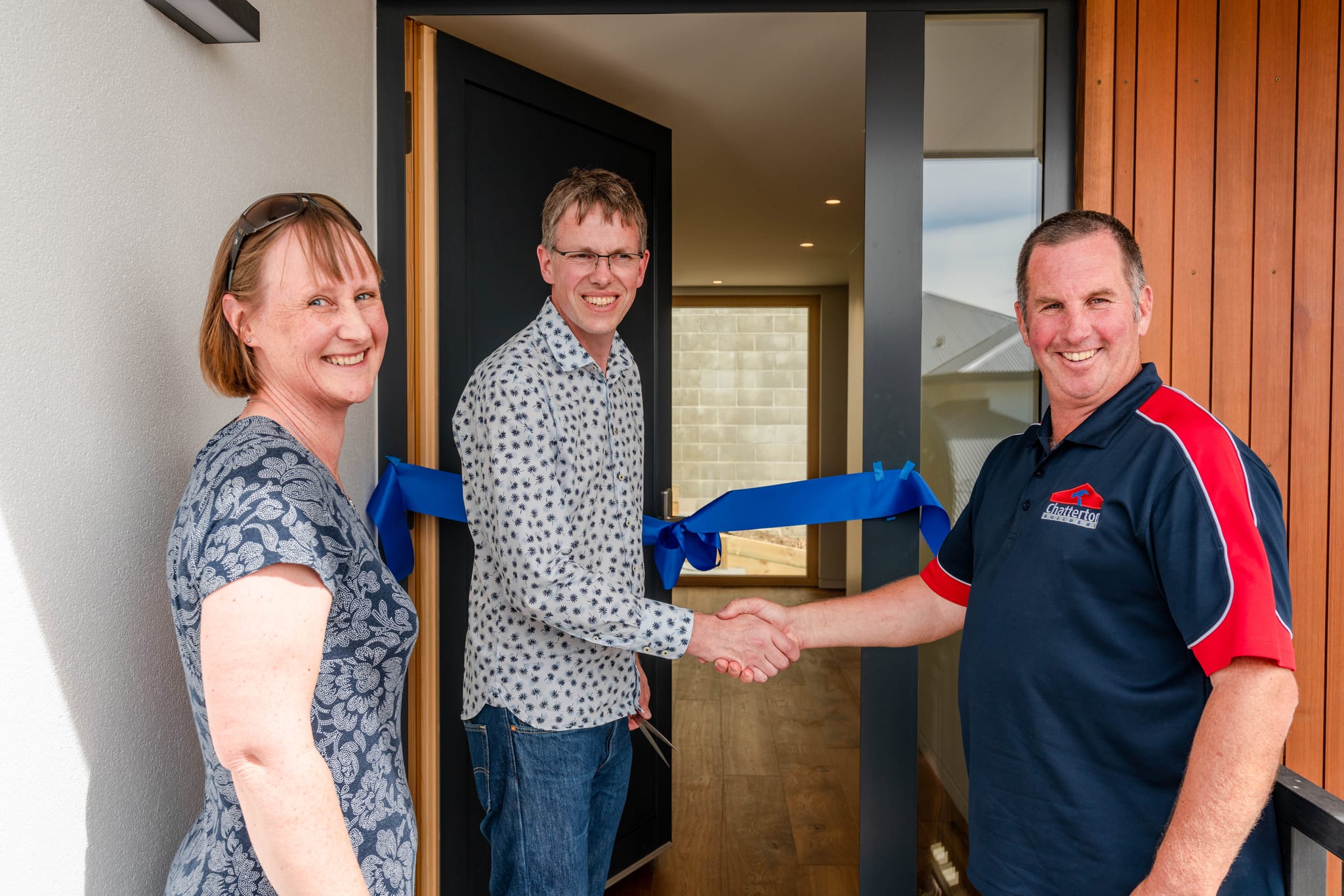
“You get home and you just immediately relax and feel calm. It is so peaceful and it’s hard to explain the calmness of these homes – you need to experience it. It’s quite something.”
Iain McMillan
View Testimonial Video

“We really think (high performance) is the way to build in New Zealand. You guys have all the knowledge, all the know-how, and we’re left with no doubt that this is what you specialise in. You did such a good job!”
Geert & Brenda
View Testimonial Video
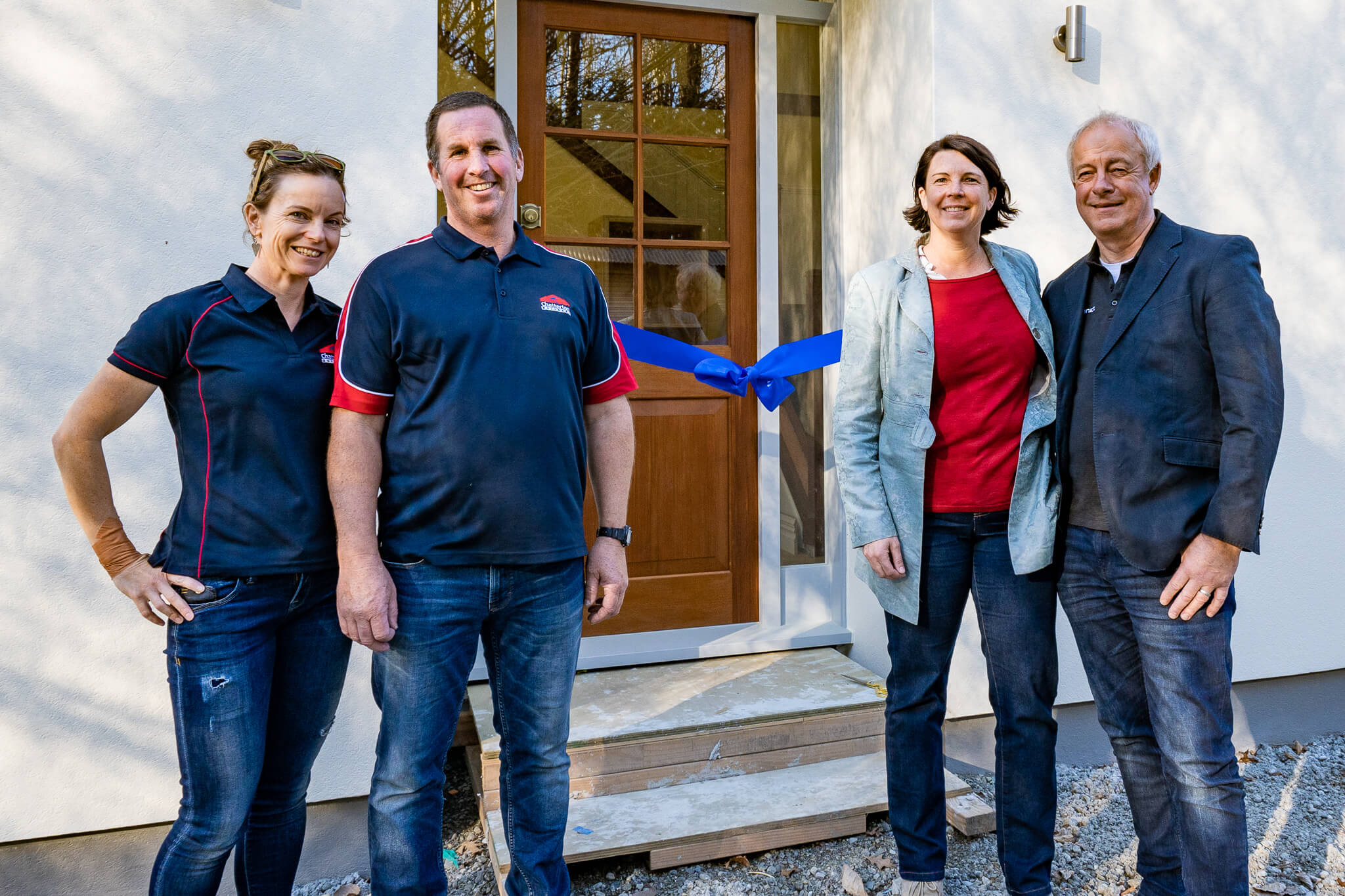
“The most fundamental thing would be the quality of your builders… They’re just fundamentally good people that give a damn about the job and it really comes through.”
Geoff & Jenny
View Testimonial Video
Did you know we offer a SIPs Pre-assembly & Install Service – Save time and money on your build!