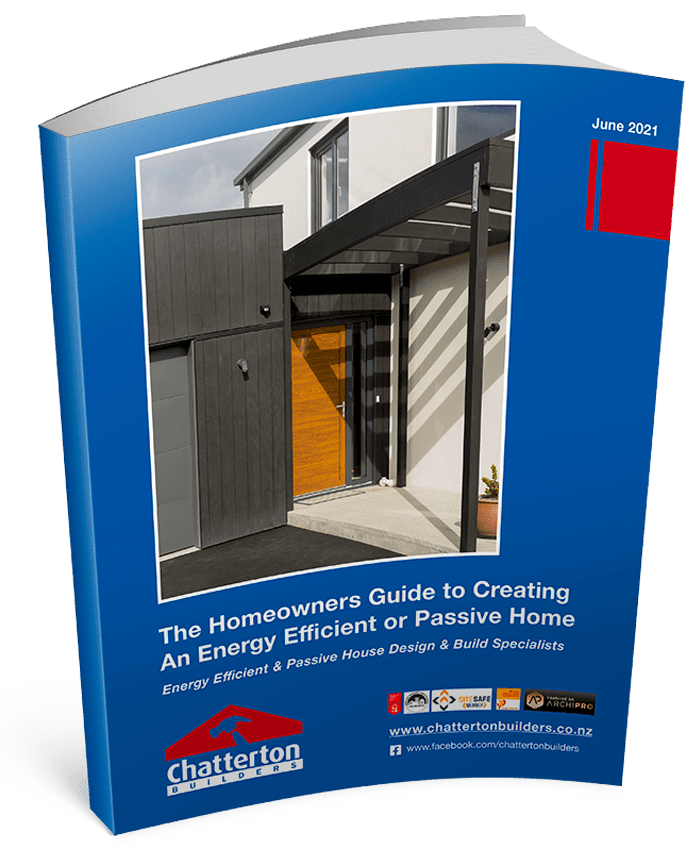
The Homeowners Guide to Achieving a Healthy, Comfortable, Energy Efficient Home
What Makes a High-Performance, Energy Efficient Home
Our definition:
A healthy, comfortable, quiet home filled with fresh, filtered air and delivering up to 90% energy savings on heating and cooling.
We achieve this level of performance by applying five key principles based on Passive House (Passivhaus) standards, integrated into a comprehensive design and build process for every home we create. With the right knowledge and experience, these principles can be successfully adapted to any design, resulting in exceptional comfort, air quality, and energy efficiency.
For added reassurance, we offer energy modelling to provide tangible performance data and clear insights into expected outcomes.
There are several ways to construct energy-efficient and passive homes, depending on performance goals, site conditions, and budget. All our systems create a highly efficient airtight and thermally robust envelope, two critical components of a genuinely healthy, comfortable and energy efficient home.
High performance isn’t one size fits all. While we’ve grouped our construction pathways into three performance levels, your final choices will reflect your lifestyle, priorities, and budget. See our FAQs below for more information.
See a Range of Completed Homes Featuring Homeowner Choices (& Their Experiences)
High Performance Building Levels — From Efficient Design to Passive House

Energy Efficient Home
Level 1 - Efficient By Design
- Performs above the minimum building code.
- Apply the same high-performance principles – just with greater flexibility in how they’re delivered.
- Energy demands are not prescribed.
- Performance testing of design through energy modelling is not required (optional).
- High level of flexibility in certain areas of the design to meet budget or site constraints, or homeowner requirements.
- Verification through certification is not required.
- Can be the most flexible and least expensive option.

Energy Modelled Home
Level 2 - Backed By Data
- Performs well above the minimum building code.
- Passive house principles incorporated to achieve superior performance objectives.
- Energy demands are not prescribed but energy modelling (PHPP) provides performance expectations which can guide performance outcomes.
- Level of flexibility in certain areas of the design plus benefit of energy modelling data to advise on design options and changes (cost v benefit).
- Verification through certification is not required.

Certified Passive Home
Level 3 - Certified for Performance
- Optimal High-Performance Home.
- Passive house principles incorporated to achieve superior performance objectives.
- Energy demands are strictly prescribed to ensure optimal performance is achieved. Includes heating and cooling loads below 15 kWh/m2 per year, and less than 10 W/m2 at peak demand.
- Energy modelling (PHPP) required. Provides performance expectations which must meet the International Passive House Association (iPHA) criteria.
- Less flexibility due to strict criteria but retains the benefit of energy modelling data to advise on design options and changes (cost v benefit).
- Verification and certification is required.
- Least flexible with additional costs for PHPP, international verification and certification. However, it is the ultimate high performance home.
- iPHA also offer an international ‘Low Energy Standard’. Performance levels and energy demands are still prescribed but they are lower than that of a certified passive house.
Core Principles of Energy Efficient & Passive Home Building

INSULATION

AIRTIGHTNESS

HEAT RECOVERY VENTILATION

HIGH PERFORMING WINDOWS

THERMAL BRIDGES ADDRESSED
Discover Why Passive House Principles Are So Important
Achieving an Energy Efficient or Passive House - Common FAQs
How much more expensive is it to build a passive house or energy efficient home in New Zealand?
In New Zealand, building a Passive House or energy-efficient home usually costs more upfront than building to minimum Building Code standards. However, this higher initial investment is offset by long-term benefits such as lower energy bills, improved indoor comfort, and better health outcomes.
The exact cost difference depends on factors like house size, design, and material selections. In many NZ projects, high-performance homes may cost more than standard builds, but this gap is continuing to reduce as building standards improve.
Why do Passive Houses cost more to build?
- Higher-quality insulation, windows, and airtightness systems
- Mechanical ventilation systems for consistent fresh air
- More detailed design and construction processes
How can you reduce the cost of a high-performance home?
- Optimise floor area (e.g. remove rarely used rooms like guest bedrooms)
- Simplify the building design and form
- Focus budget on performance-critical elements rather than size
Are energy-efficient homes becoming more affordable in NZ?
Yes. Recent updates to the New Zealand Building Code (including insulation and glazing requirements) are raising the baseline for all homes. As regulations continue to move toward low-carbon, healthier homes, the cost difference between standard homes and high-performance homes is expected to keep decreasing.
What’s the difference between certified and non-certified Passive House?
- Certified Passive House: Higher cost due to strict modelling, materials, and verification requirements
- Non-certified Passive House: More flexible and budget-friendly, while still delivering significantly better performance than minimum code homes
Is a Passive House worth the extra cost in New Zealand?
For many homeowners, yes. While upfront costs are higher, the long-term value includes:
- Lower heating and cooling costs
- More stable indoor temperatures year-round
- Healthier indoor air quality
- Increased durability and future resilience
How do you know what’s worth investing in?
Energy modelling during the design stage allows you to compare different options and understand the cost-benefit of each decision. This helps you prioritise what matters most and achieve the best performance within your budget.
Bottom line
Building a Passive House or energy-efficient home in New Zealand costs more initially, but delivers significantly greater long-term value. With smart design choices and careful budgeting, you can balance upfront cost with performance, comfort, and energy savings.
Where should I invest my money in an energy efficient home?
The best place to invest in an energy-efficient home is in the elements that are hardest to change later and have the greatest impact on comfort, health, and performance…..particularly design, insulation, airtightness, and ventilation.
1. Start with good design
Good design is the foundation of an energy-efficient home. A well-designed home integrates orientation, layout, and building form to support performance, comfort, and indoor health from the outset.
2. Prioritise insulation and airtightness
Insulation and airtightness are critical components of a high-performance home and are difficult to upgrade after construction.
- High-quality insulation reduces heat loss and improves thermal comfort
- Airtight construction prevents uncontrolled air leakage, increasing efficiency and consistency
3. Invest in a Mechanical Heat Recovery Ventilation (MHRV) system
A Mechanical Heat Recovery Ventilation (MHRV) system plays a key role in maintaining indoor air quality and energy efficiency. It works by:
- Continuously supplying fresh, filtered air
- Recovering heat from outgoing stale air to warm incoming air
- Supporting a healthier, more comfortable indoor environment
What is the most important investment in an energy-efficient home?
The most important investments are the building envelope (insulation and airtightness) and ventilation system, supported by good design. These elements deliver the greatest long-term impact and are the most difficult to change later.
Bottom line
To get the best value from an energy-efficient home, prioritise design, insulation, airtightness, and ventilation. Investing in these areas early ensures better performance, improved health, and long-term comfort.
How much does it cost to build an energy efficient home?
Building an energy-efficient home or Passive House typically costs more upfront than a minimum code-built home. However, this higher initial investment delivers long-term benefits through improved comfort, better health, and lower energy use.
The total cost varies depending on your desired performance level, house size, and product selections. A key advantage is that energy-efficient homes can be tailored to suit different budgets.
What factors affect the cost of an energy-efficient home?
Several design and specification choices influence cost, including:
- Performance level (e.g. Passive House vs high-performance home)
- Window specifications and glazing quality
- Mechanical Heat Recovery Ventilation (MHRV) systems
- Level of thermal bridge management
- Overall house size and complexity
While the thermal envelope (insulation and airtightness) is fundamental, these elements can be adjusted to balance performance and budget.
Can you build an energy-efficient home on a budget?
Yes. If budget is more constrained, alternative approaches can still achieve excellent airtightness and energy efficiency….even if not to full Passive House certification levels.
How can you reduce the cost of building a high-performance home?
There are several ways to manage costs without compromising performance:
- Reduce floor area (e.g. remove a guest bedroom)
- Minimise hallways through efficient design
- Prioritise investment in the building envelope over size
- Choose specification levels that align with your budget
How does energy modelling help manage cost?
Energy modelling at the design stage allows you to test different design options and understand their cost-benefit. This helps you make informed decisions and prioritise the features that deliver the most value. This approach can also be applied to Level 1 ‘Energy Efficient by Design’ homes.
Are there more affordable high-performance home options?
Yes. Pre-designed high-performance plans can offer a more cost-effective pathway. These typically include:
- Set pricing and defined inclusions
- Options to upgrade depending on budget
- A range of layouts (e.g. 2–4 bedroom homes)
Is building an energy-efficient home worth the cost?
For many homeowners, the answer is yes. While upfront costs are higher, the long-term value includes:
- Lower energy bills
- Improved indoor comfort year-round
- Healthier indoor air quality
- Better long-term durability and performance
Bottom line
The cost of building an energy-efficient home depends on your design choices and performance goals. By using smart design, prioritising key elements, and leveraging tools like energy modelling, you can achieve a high-performance home that balances cost, comfort, and long-term value.
What is your m2 rate for a high performing home?
The cost per square metre (m² rate) for a high-performance or energy-efficient home varies significantly depending on design, materials, and level of performance. Because every home is unique, the m² rate can differ widely, even for homes with the same floor area.
Rather than focusing only on cost per m², it’s important to consider total project cost and overall value.
Why does the m² rate vary so much?
Several factors influence the cost per m²:
- Design and building form: Shape, structure, and complexity all affect cost
- Material and specification choices: Higher-performance materials and systems increase upfront cost
- Room types and layout: Kitchens and bathrooms cost more per m² than bedrooms or living areas
- Performance level: Passive House and higher-performance homes require more detailed construction
For example, a home with more bedrooms and living areas may have a lower m² rate, but a higher total cost due to increased floor area.
Do energy-efficient homes have a higher m² rate?
Often, yes, but for a good reason.
Energy-efficient homes are typically designed to:
- Eliminate unused or inefficient spaces
- Improve layout efficiency
- Prioritise performance over size
This can result in a higher cost per m², while still achieving a lower overall build cost due to a smaller, more efficient footprint.
Design and build: how budgeting works
For our custom design and build projects, the focus is on aligning your budget with your priorities.
- Each home is tailored to your needs and performance goals
- Early discussions help define what’s achievable within your budget
- You receive guidance on where to invest for the best value
Because of this, a fixed “rate per m²” is less meaningful than a well-defined scope and budget.
High-performance plan range
If you’re looking for more cost certainty at the very start, a high-performance plan range can be a good option.
- Fixed pricing for a specific design and inclusions
- Clear understanding of what’s included
- Ability to upgrade depending on budget
Is cost per m² a good way to compare homes?
Cost per m² can be misleading as it doesn’t tell the full story. It doesn’t account for:
- Performance and energy efficiency
- Build quality and durability
- composition of rooms (lower cost living bedrooms versus higher cost bathroom/kitchens)
- Design complexity and specification level
Two homes with the same m² rate can deliver very different outcomes in comfort, health, and long-term value.
Bottom line
The m² rate for a high-performance home varies widely and should be used as a guide only. The best approach is to focus on total project cost, design efficiency, and performance outcomes to ensure you get the best value for your investment.
How much can I save on heating and cooling with an energy efficient or passive home?
An energy-efficient home or Passive House can significantly reduce heating and cooling costs, often by up to 70–90% compared to a standard code-built home, depending on design, airtightness, and system performance.
These savings come from creating a highly controlled indoor environment that minimises heat loss and maximises energy efficiency.
Why are heating and cooling costs so much lower?
All our energy-efficient homes use Passive House principles to maintain stable indoor temperatures with minimal energy input. Key factors include:
- High airtightness: Prevents unwanted heat loss and drafts
- High-performance insulation: Keeps warmth in during winter and heat out in summer
- Mechanical Heat Recovery Ventilation (MHRV): Continuously supplies fresh air while recovering heat
A well-designed heat recovery system can operate at up to 95% efficiency, meaning very little heat is lost during ventilation.
Do you still need heating and cooling?
In some cases, no, a home that performs at the level of a Certified passive house will not. In most homes one small heat pump (4kw) is all that is needed to assist on more extreme (cold or hot) days. It will always be much less than in a standard home.
Because the home retains heat so effectively:
- Internal heat sources (people, appliances, sunlight) contribute significantly to maintaining temperature
- Only small amounts of additional heating or cooling are needed during extreme weather
If you need further reassurance, thermal modelling will indicate at the design stage what additional heating or cooling, if any, will be required.
What affects how much you’ll save?
The level of savings depends on:
- Overall design and orientation
- Airtightness achieved during construction
- Quality of insulation and windows
- Efficiency of the ventilation system
- Climate and how the home is used
Is it worth it for energy savings alone?
While the reduction in energy bills is significant, the biggest benefits often go beyond cost savings:
- More consistent indoor temperatures year-round
- Improved comfort with fewer drafts and cold spots
- Better indoor air quality and healthier living conditions
Bottom line
Energy-efficient homes dramatically reduce the cost of heating and cooling by minimising energy loss and maximising system efficiency. While exact savings vary, most homeowners experience substantially lower energy bills along with improved comfort and health. Check out some of our homeowner feedback – Cashmere / Bowenvale / Lake Opuha
How do Chatterton Homes support better health?
Chatterton Homes are designed to support healthier living by creating a consistently comfortable, clean, and stable indoor environment throughout the year.
A key factor is indoor air quality. Our homes use continuous, balanced ventilation systems that gently supply fresh, filtered air while removing stale air. This helps reduce common indoor pollutants such as moisture, dust, and allergens, creating a fresher and healthier space to live in.
We also focus on stable indoor temperatures. Heat recovery and high levels of insulation and airtight construction mean fewer temperature swings between rooms and across seasons. Instead of hot and cold spots, your home maintains a steady, comfortable temperature that supports overall wellbeing, including better sleep and day-to-day comfort.
By carefully managing moisture, our homes are designed to minimise condensation, mould, and dampness. This is particularly important for respiratory health and helps protect both the home and the people living in it.
You’ll also notice the absence of draughts and uncontrolled air leakage. This not only improves comfort but reduces the circulation of dust and outdoor irritants entering the home.
Many homeowners find that this combination of clean air, consistent warmth, and reduced environmental stressors contributes to a greater sense of ease at home. Comfort becomes something you can rely on, rather than something that needs to be constantly managed.
In short, a Chatterton Home supports better health by addressing the indoor environment as a whole system (air, temperature, and moisture) so you can live in a space that feels consistently comfortable, calm, and healthy.
What makes Chatterton Homes different from other ‘energy-efficient’ or high-performance builders?
Chatterton Homes takes a whole-home, system-based approach using Passive House principles, rather than relying on individual products or isolated upgrades. This ensures every part of the home works together to deliver superior comfort, health, and energy performance.
Why isn’t all “energy-efficient” building the same?
Many homes are marketed as “energy-efficient,” but often rely on isolated features rather than a fully integrated design approach.
Examples of isolated solutions include:
- Adding a heat pump
- Installing double glazing
- Using a ventilation system
While these can improve efficiency, they don’t guarantee overall performance if the rest of the home isn’t designed to support them.
What is Chatterton Homes’ approach?
All Chatterton Homes are designed using Passive House principles, where every element is considered as part of a complete system:
- Airtightness
- High-performance insulation
- Quality windows and glazing
- Mechanical Heat Recovery Ventilation (MHRV)
- Thermal bridge minimisation
Because these elements are interconnected, each design decision is made with a clear understanding of how it affects comfort, air quality, energy use, and long-term performance.
Why don’t isolated upgrades deliver the same results?
Focusing on one feature alone can overlook critical aspects of how a home performs:
- Drafty homes still lose heat, even with efficient heating systems
- Ventilation systems may bring in unfiltered or unconditioned air if not properly designed
- Heating and cooling systems can increase energy use without solving underlying issues
- Passive solar design alone may lead to overheating or poor air quality if not balanced
This can result in ongoing issues with:
- Indoor air quality
- Moisture and humidity
- Comfort and temperature consistency
- Energy costs
What results can you expect from a Chatterton Home?
By applying a fully integrated design and build process, Chatterton Homes deliver:
- Consistent indoor temperatures year-round
- Continuous fresh, filtered air
- Reduced drafts and improved acoustic comfort
- Up to 90% reduction in heating and cooling energy use (depending on design)
- A healthier, more comfortable living environment
Why is an integrated design approach important?
Passive House design works on a cause and effect basis where every decision influences another. Without this level of integration, it’s difficult to achieve high performance across all areas of the home.
A comprehensive approach ensures:
- Better long-term performance
- Greater energy efficiency
- Improved occupant wellbeing
- More predictable outcomes
Bottom line
The key difference with Chatterton Homes is not just the products used, but how the entire home is designed and built as a system. This integrated approach delivers significantly better results than isolated “energy-efficient” upgrades.
Do you have a show home I can visit?
Chatterton Homes does not currently operate a fixed show home. Instead, we offer a more flexible approach, giving you the opportunity to view real high performance homes at different stages of construction.
Can I visit a Chatterton Home in person?
Yes. We regularly have homes under construction or recently completed, and there are often opportunities to view these projects.
- View homes at different stages of the build
- See real examples rather than display-only show homes
- Gain a better understanding of materials, detailing, and performance
Get in touch and we can let you know what viewing opportunities are currently available.
Why don’t you have a show home?
Our previous show home in Amberley proved too far for many people to travel. Instead, we now focus on providing access to active projects, which offer a more realistic and valuable experience.
What are mid-build events?
We regularly host mid-build (open site) events, which are one of the best ways to understand how a high-performance home works.
These events allow you to:
- See Passive House principles before walls are lined
- Understand airtightness, insulation, and construction detailing
- Ask questions to a team of experts and learn how performance is achieved
Because these events depend on build timing, availability can vary, so it’s best to register your interest, join our mailing list or ask what’s coming up.
How do I arrange a visit?
The best way is to contact us directly and let us know:
- Where you are in your building journey
- Your location
- What you’re most interested in seeing
We’ll recommend the most suitable viewing option based on current projects and upcoming events.
Bottom line
While we don’t have a traditional show home, we offer something more valuable – the chance to experience real high-performance homes in progress, and see firsthand the quality and detail that goes into every Chatterton Home.
Can you change plans from timber frame to SIPs?
Yes, it is possible to change from timber framing to SIPs (Structural Insulated Panels), but this is best done early in the design process, ideally at the concept stage.
When is the best time to switch to SIPs?
The concept design stage is the most suitable time to make this change. At this point:
- The design can be adjusted to suit SIP construction
- Structural and detailing requirements can be incorporated early
- Cost implications can be clearly understood and managed
We can work with you and your designer to assess feasibility and guide you through the process.
Can you switch to SIPs later in the project?
It becomes significantly more difficult at the working drawing stage or later.
By this stage:
- Detailed plans and specifications are already developed
- Structural systems are largely fixed
- Changes may require redesign, additional engineering, and added cost
Why consider SIPs for a high-performance home?
SIPs can support high-performance outcomes by:
- Improving airtightness
- Providing consistent insulation
- Reducing thermal bridging
However, they must be integrated into a well-designed system to achieve the best results.
Bottom line
Switching from timber framing to SIPs is absolutely possible, but timing is critical. Making the change early in the design process ensures better outcomes, fewer complications, and clearer cost control.
What is the difference between Homestar and Passive House (Passivhaus)?
Homestar and Passive House (Passivhaus) both aim to improve home performance, but they serve different purposes:
- Passive House is a design methodology and performance standard
- Homestar is a rating tool that measures overall home sustainability practices & certain performance indicators
What is Passive House (Passivhaus)?
Passive House is a high-performance building standard focused on delivering exceptional energy efficiency, comfort, and indoor air quality.
It is based on key principles:
- Airtight construction
- High levels of insulation
- High-performance windows
- Mechanical Heat Recovery Ventilation (MHRV)
- Minimising thermal bridging
Certified vs non-certified Passive House
- Certified Passive House:
Must meet strict, measurable performance targets and undergo independent verification. This provides proven, predictable performance, but can increase cost and reduce design flexibility. - Non-certified Passive House (or Passive House principles):
Uses the same design approach with more flexibility, allowing you to balance performance and budget while still achieving results well above minimum code.
What is Homestar?
Homestar is a New Zealand-based rating system that assesses the overall performance and sustainability of a home.
- Provides a score (e.g. 6–10 Homestar rating)
- Evaluates energy use, comfort, health, water efficiency, and environmental impact
- Can be applied to both new and existing homes
Homestar does not dictate how a home is built, instead it measures a range of factors that contribute to sustainability and livability.
Can a home achieve a high Homestar rating without being a high-performance home?
Yes. A home can achieve a relatively high Homestar rating without performing at the same level as a home built with high performance/passive house principles.
This is because Homestar scores are influenced by a wide range of factors, including:
- Proximity to public transport and amenities
- Material choices and recycling practices
- Construction waste reduction
- Water efficiency and greywater systems
While these are important sustainability measures, they do not always directly reflect the core performance of the building envelope, such as airtightness, insulation quality, and energy demand.
Can a home be both Homestar rated and Passive House?
Yes. A home can be designed using Passive House principles and also achieve a Homestar rating.
- Passive House focuses on how the home performs (especially energy, comfort, and air quality)
- Homestar provides a broader sustainability rating across multiple categories
Which is better: Homestar or Passive House?
They are not direct alternatives as they measure different things.
- Choose Passive House if your priority is guaranteed, high-level performance and comfort
- Choose Homestar if you want a holistic sustainability rating
- Many high-performance homes combine Passive House principles with a Homestar rating
Bottom line
Passive House is a performance-driven design approach, while Homestar is a broad sustainability rating system. A high Homestar score does not necessarily mean a home performs to Passive House levels, so understanding what each measures is key to making an informed decision.


How will future New Zealand Building Code changes affect my plans to build?
New Zealand’s Building Code is in the process of evolving to deliver warmer, healthier, and more energy-efficient homes. While some updates, such as improvements to insulation and window performance under the H1 clause, have already been introduced, further changes are expected over time.
Although parts of this roadmap are currently on hold, the overall direction is clear: the Government has recognised that many homes in New Zealand do not perform well and intends to raise the standard of new housing.
What changes are likely in the future?
Future Building Code updates are expected to progressively introduce:
- Improved airtightness standards
- More robust ventilation requirements
- Greater focus on reducing energy use and carbon emissions
The timing of these changes is uncertain, but they reflect a long-term shift toward better performing homes.
Is New Zealand moving toward Passive House-level performance?
The long-term intention signalled by MBIE has been to significantly reduce heating demand in residential homes, moving closer to international high-performance benchmarks such as Passive House.
While this level of performance is not currently required, future changes are expected to continue pushing in this direction.
What does this mean for your build?
Even with some changes on hold, the trajectory is clear. For homeowners, this means:
- Building to a higher standard now can future-proof your home
- Minimum code homes are likely to continue improving over time
- There is increasing value in considering energy efficiency and performance early in the design process
Will these changes affect building costs?
As standards increase, upfront costs may rise. However:
- The gap between minimum code homes and high-performance homes is expected to continue narrowing
- Higher-performing homes typically deliver lower running costs over time
- Many features considered “premium” today are likely to become standard in the future
Bottom line
While the timing of future Building Code changes is uncertain, the direction is not. The Government has acknowledged that New Zealand homes need to perform better and is working toward raising the standard. Building with performance in mind now helps ensure your home remains comfortable, efficient, and future-ready.
What climates are suitable for High-Performance and Passive House homes?
High-performance and Passive House homes are suitable for all climates, including cold, hot, humid, and windy environments.
The core principles, namely, airtightness, continuous insulation, and balanced ventilation, work together to deliver comfort, health, and energy efficiency regardless of location.
Do Passive House principles work in New Zealand’s climate?
Yes. Passive House and high-performance homes are well suited to New Zealand’s varied climate zones, from colder southern regions to warmer, more humid western and northern areas.
These homes are designed to respond to local conditions, ensuring consistent performance across different environments.
How do the principles apply to different climates?
While the core principles stay the same, there are key benefits for any climate:
- Cold climates:
Higher insulation levels and high-performance glazing help retain heat and reduce heating demand - Warm or sunny climates:
Greater emphasis on shading, solar control, and overheating prevention - Humid or wet climates:
Airtight construction combined with balanced ventilation helps control moisture, reducing condensation and mould - Windy environments:
Airtightness improves comfort by eliminating drafts and uncontrolled air leakage - City environments (Noise or Air Pollution): Airtight construction and balanced ventilation provide fresh, filtered air while preventing polluted air entering the home. The high-performance airtight envelope also reduces external noise, improving indoor comfort.
Each home is carefully designed to suit its specific location, orientation, climate and conditions.
Why are high-performance homes especially effective in wet or humid climates?
In damp environments, traditional homes can struggle with condensation, mould, and poor indoor air quality.
High-performance homes address this by:
- Preventing uncontrolled moisture entering the building
- Maintaining consistent internal temperatures
- Providing continuous fresh, filtered air through ventilation systems
This creates a drier, healthier living environment year-round.
What results can you expect in any climate?
No matter where the home is built, the outcome is consistent:
- Stable indoor temperatures year-round
- Continuous supply of fresh, filtered air
- Reduced drafts and improved comfort
- Significantly lower energy use for heating and cooling
Bottom line
High-performance and Passive House homes are designed to work in any climate. By adapting the design to local conditions, they consistently deliver superior comfort, health, and energy efficiency wherever they are built.